
A song gets stuck in your head, but its title is nowhere to be found. Spotify keeps a record of your listening activity, although the app only displays your recent plays. Older listening records are available through your downloadable account data.
Learn how to see history on Spotify, find past tracks across devices, and explore how FamiSafe helps parents monitor Spotify activity.
Table of Content
- Part 1: What Spotify Listening History Can You See?
- Part 2: How to See Spotify History on iPhone and Android
- Part 3: How to Check Spotify Listening History on a Computer
- Part 4: How to Find Older Spotify Listening History
- Part 5: How Parents Can Monitor Spotify Activity with FamiSafe
- Frequently Asked Questions
Part 1: What Spotify Listening History Can You See?
Spotify splits your history across two very different places. The app shows a short rolling list called “Recents,” while your full record lives in downloadable account files. Knowing which one holds what saves a lot of searching. How to see Spotify history depends on whether you need recent plays or older listening records.
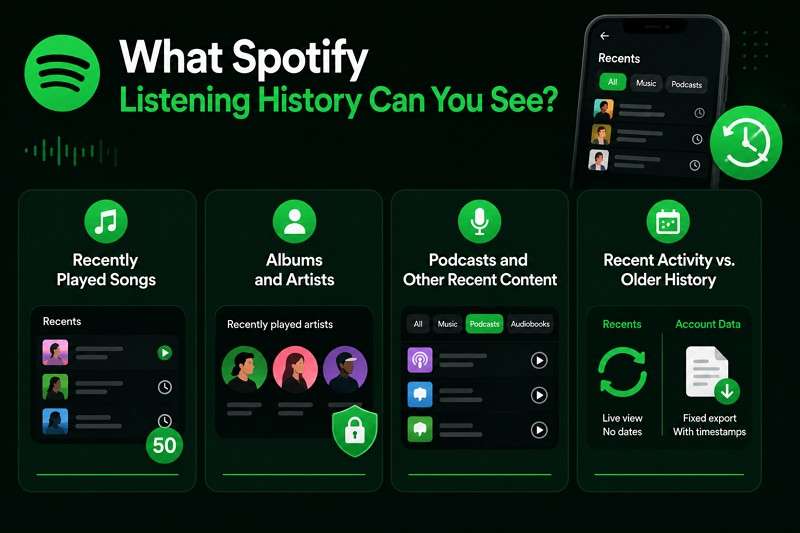
Recently Played Songs: Recents displays your recently played tracks with the newest activity first. On the desktop app, you can view your last 50 songs, while older plays eventually leave this list.
Albums and Artists: Your profile can show recently played artists to other users, separately from Recents. This visibility is enabled by default, but you can disable it under privacy and social settings.
Podcasts and Other Recent Content: Recents can include podcasts and other recently accessed content alongside music. Available filters help narrow the list by content type, making specific activity easier to find.
Recent Activity and Older Streaming History: Recents provides quick access to recent listening activity, while downloadable account data offers timestamps and older records. Use the appropriate option depending on how far back you need to check.
Private Session controls listening visibility and personalization without clearing your history. While active, listening stays hidden from Friend Activity, Recently Played Artists stop updating, and those streams do not influence music recommendations or Wrapped.
Part 2: How to See Spotify History on iPhone and Android
It costs nothing and answers most questions about how to check history on Spotify. The path is identical on iPhone and Android, and it does not sit in Settings.
Instructions: Open Spotify and tap your Avatar in the top corner, then select Recents to load the list. Select a filter along the top, such as Music or Podcasts, to isolate one type of content.
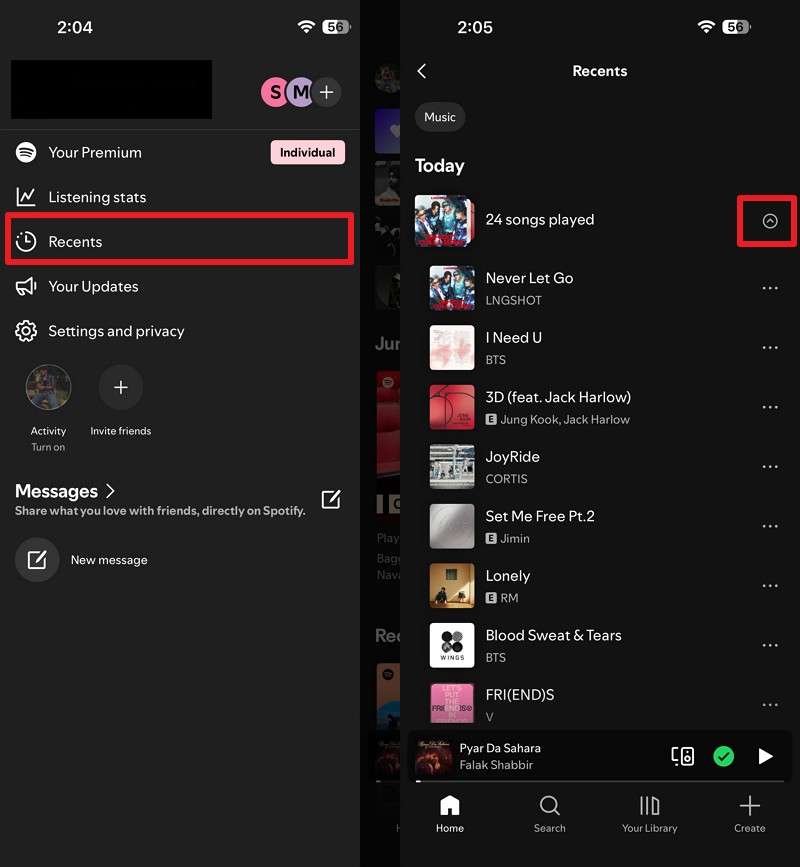
Note: Recents only covers tracks that you played. A song you searched for but never played will not appear.
Part 3: How to Check Spotify Listening History on a Computer
Desktop and web apps place the Recents view inside the queue control, completely away from the main home page. That is why how to view Spotify history on a computer gets asked more often than the phone version.
Method 1: Check Recent Songs in the Spotify Desktop App
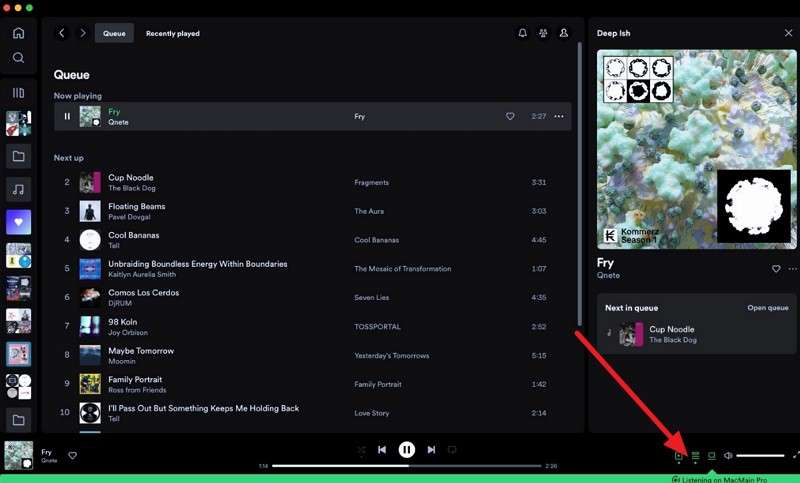
The desktop app places Recents inside the Play Queue panel rather than your profile, making it easy to overlook. Spotify states this view displays your last 50 tracks, which suits recent searches rather than older history.
Instructions: Click the Play Queue icon at the bottom of the Spotify desktop app, then select Recents. Scroll through the list to find the track you played.
Method 2: Check Recent Activity in the Spotify Web Player
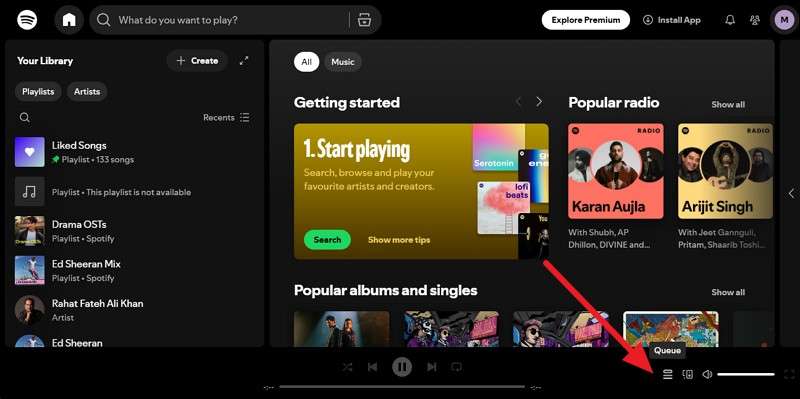
The web player offers access to Spotify through a browser, but recent listening history is not consistently available through its Queue panel. This can make previously played tracks less straightforward to find.
Step 1: Go to open.spotify.com and click the Queue icon in the player bar, then switch to the Recents tab.
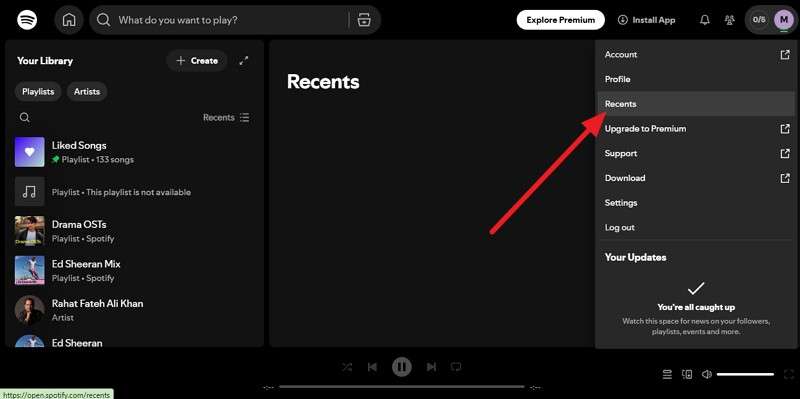
Step 2: If that tab is missing, open your Profile from the avatar menu and choose Recents to read the recently played artists row instead.
Part 4: How to Find Older Spotify Listening History
Standard methods show only recent activity. To access listening history from earlier months or years, request a full data archive directly from Spotify.
| Metrics | Account Data | Extended Streaming History | Technical Log Information |
|---|---|---|---|
| History Range | Past year | Lifetime of account | Technical account records |
| Best For | Finding plays from recent months | Finding older songs and analyzing listening history | Troubleshooting and account analysis |
| Key Data Included | Stream end time, creator/title, milliseconds played | Timestamp, track, artist, album, platform, milliseconds played, country, skip, shuffle, offline, and Private Session status | Commands, errors, and log strings |
| Detail Level | Basic | Detailed | Technical |
| Format | JSON | JSON | Downloaded data files |
Request Spotify Account Data
Step 1: Go to the Account Privacy page, choose Account Data, and press Request Data.
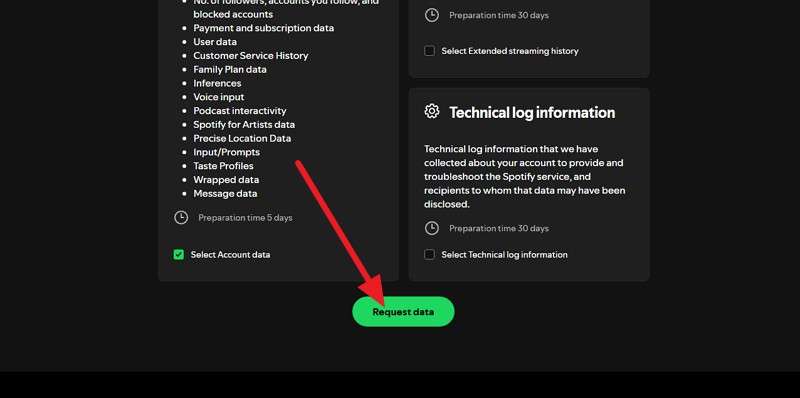
Step 2: Most people tick only the first box and end up with 12 months of plays. Tick Extended Streaming History as well if you want the full record, and submit both together so they arrive around the same time.
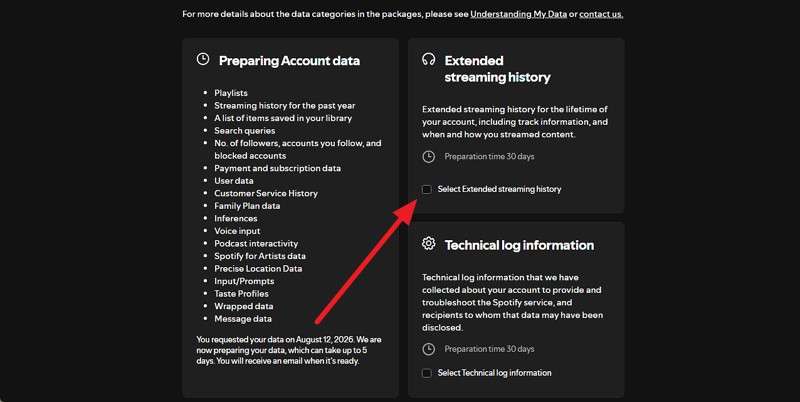
Step 3: Once requested, check your inbox and click Confirm in the verification email. Spotify will notify you via email when your download is ready.
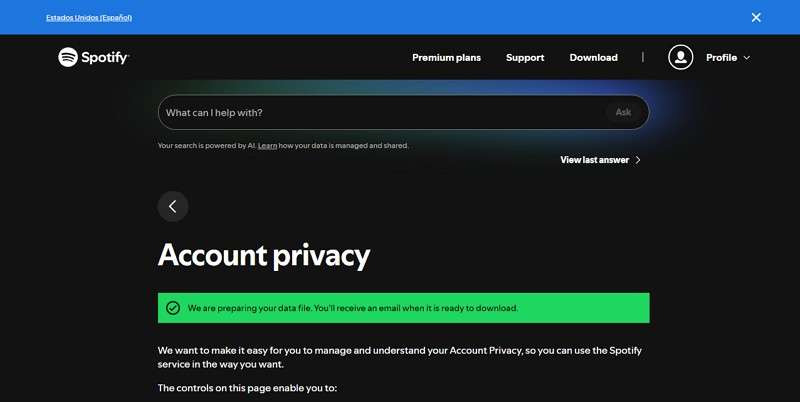
Note: Long-standing accounts often have history split across multiple numbered files rather than a single document. Review every file in the downloaded folder before assuming a specific year is missing. A Read Me First PDF ships inside the folder to explain each data field. For additional help, Spotify provides support at privacy@spotify.com.
Find Track Names, Playback Dates, and Available Streaming Details
After downloading your data, you can see your Spotify history in more detail. The export delivers JSON files, which open in text editors or spreadsheet software.
- Core Details: Track name, artist, album, and exact playback completion timestamp in UTC.
- Technical Details: Milliseconds played, platform used, country code, and offline status.
- Playback Flags: Indicators showing whether the track was skipped, shuffled, or played during a Private Session.
- Additional Account Data: Voice command transcripts, ad-targeting inferences, and technical logs.
Difference Between Recent Activity and Account Data
Recent Activity: Answers what played a moment ago with a short list of your last few dozen tracks directly inside the app.
Account Data: Delivers a complete technical record, including timestamps, duration played, device type, skip behaviors, and longer-term history since account creation.
Part 5: How Parents Can Monitor Spotify Activity with FamiSafe
Standard exports reveal how to see Spotify listening history, but track titles hide actual song lyrics. A play record confirms what a child streamed, but it does not reveal what was inside those tracks. FamiSafe's Social Apps Detection provides an additional layer by scanning supported content behind a track.
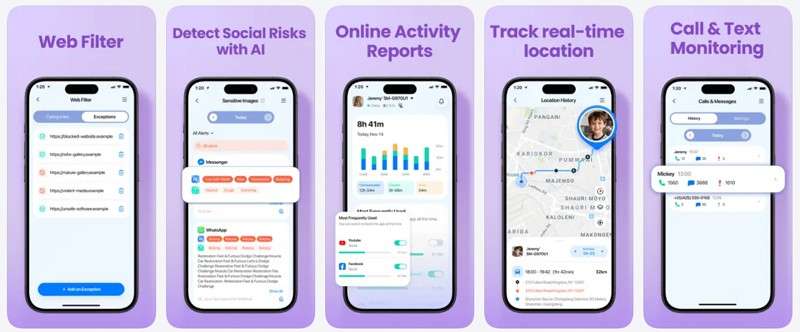
Where Spotify's own history is a list you pull, FamiSafe works differently. On both Android and iPhone, flagged content generates alert cards for parents to review. It analyzes supported Spotify activity and organizes findings into behavior and emotion categories, providing more context than a basic playback timestamp.
Key Features
- Each alert records when flagged content appears, helping parents understand when potentially concerning activity occurred.
- Monitoring supports up to 32 apps on Android and 5 supported apps on iPhone.
- Detection analyzes supported content across social apps, including conversations and other detectable activity.
- Parents can review detected activity remotely without having the child's device physically in hand.
- App-based filtering narrows the alert feed to a specific service, making relevant activity easier to review.
How to Check Spotify Activity in FamiSafe
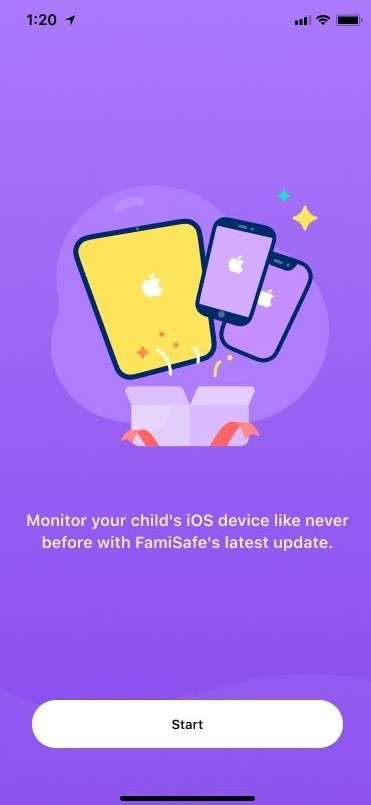
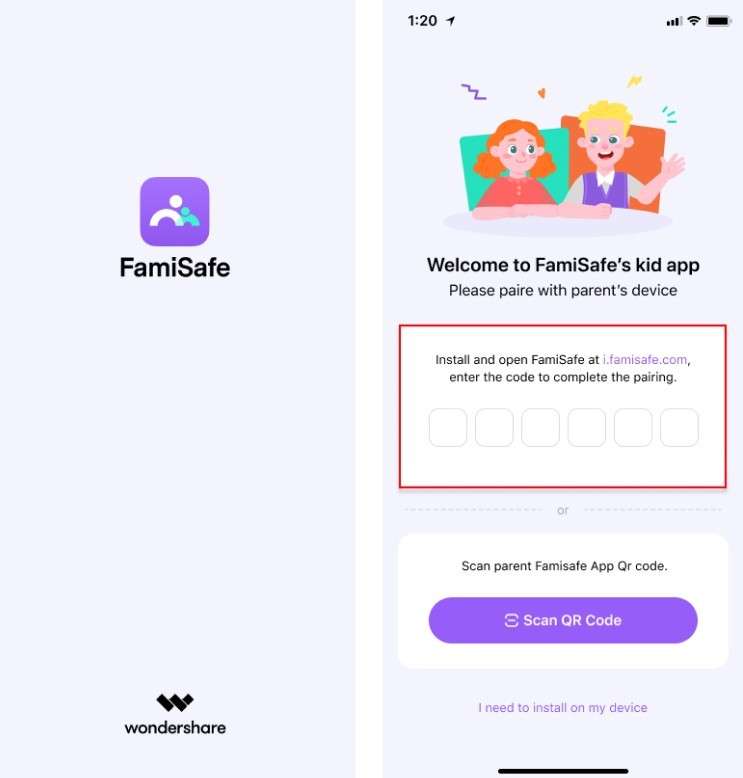
Step 1: Pair FamiSafe and Fammy App. Install the FamiSafe app, choose Start, and log in via the available options. Then download the Fammy app on the child's device.
Step 2: Pair the devices with the QR or pairing code. Open Fammy on your child's device and scan the QR code displayed in FamiSafe on the parent's device, or enter the pairing code manually.
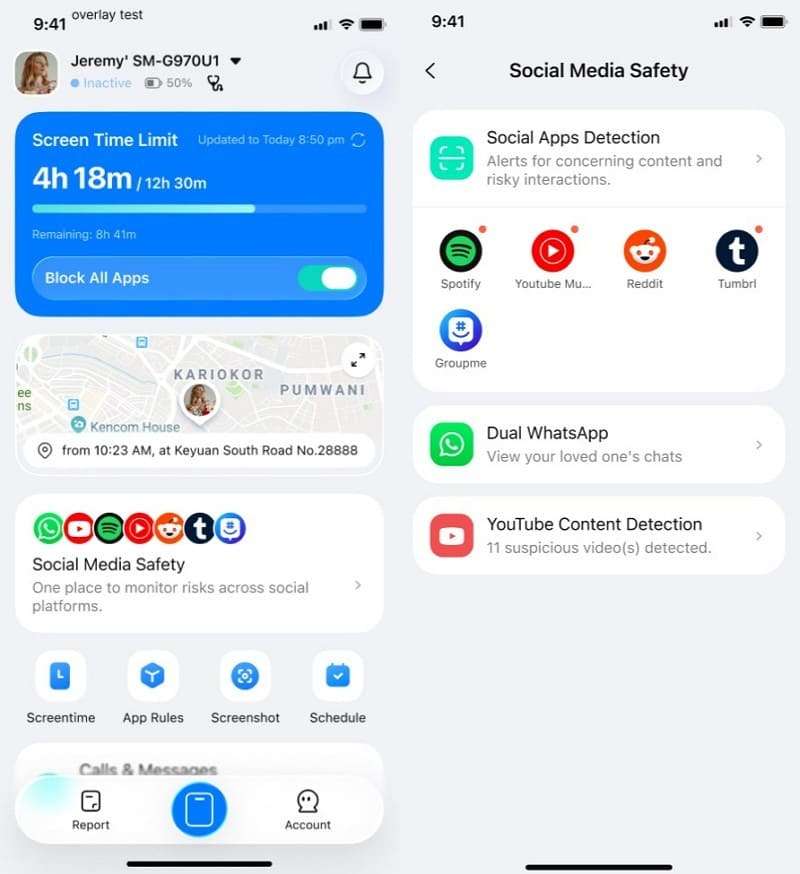
Step 3: Choose Social Media Safety and Social Apps Detection. From the FamiSafe home screen, select Social Media Safety, then open Social Apps Detection. Choose Spotify from the supported apps to view its detected activity and alerts.
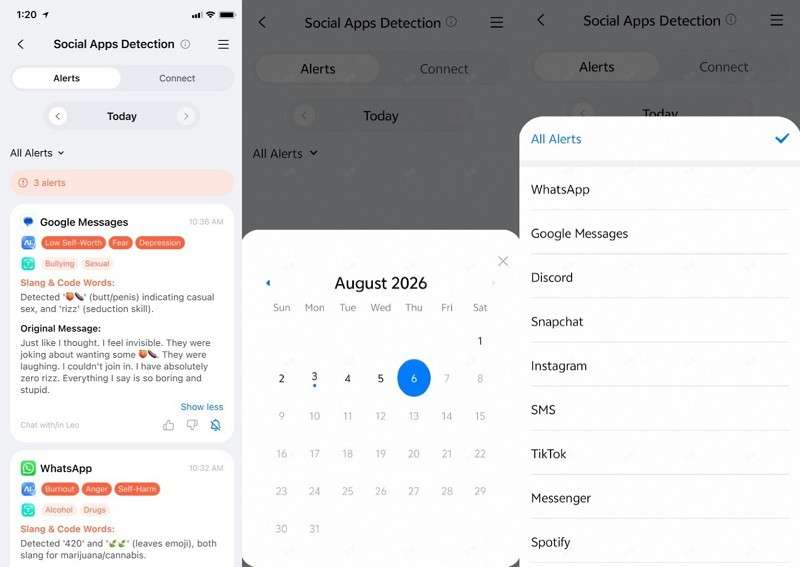
Step 4: Filter the alerts in the app. Use the < and > buttons to browse dates, or open the Alerts tab and select a day with a blue dot. Filter alerts by date and choose Spotify to review specific activity.
What Else Parents Can Understand with FamiSafe
Alert cards go beyond showing recently played Spotify tracks. Each card adds context that can help parents understand song themes instead of reviewing basic listening activity alone.
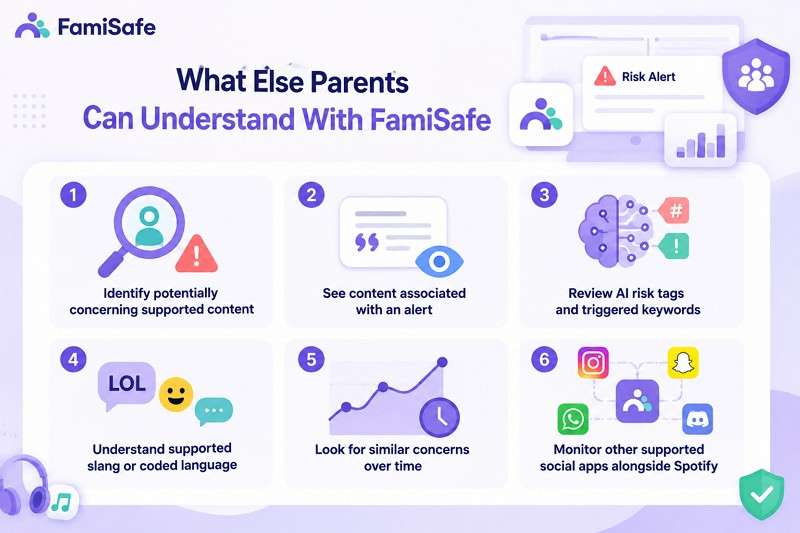
- Identify Potentially Concerning Supported Content: Detection flags bullying, self-harm, sexual content, unsafe contact, scams, and emotional or behavioral concerns across supported apps.
- See Content Associated with an Alert: Each card displays the source text that triggered the alert, helping parents review the actual wording instead of a summary.
- Review AI Risk Tags and Triggered Keywords: AI Insights organizes findings into 11 categories and 54 tags, while keyword detection checks built-in terms and parent-added keywords.
- Understand Supported Slang or Coded Language: Detection interprets abbreviations, emoji combinations, and alternate spellings that may otherwise make concerning language difficult to recognize.
- Look for Similar Concerns Over Time: Risk Trends groups alerts with related themes, helping parents distinguish isolated activity from recurring patterns that may need attention.
- Monitor Other Supported Social Apps Alongside Spotify: Spotify activity appears alongside other supported apps, helping parents recognize related concerns occurring across multiple platforms.
Conclusion
For everyday listening, Spotify's built-in Recents feature answers how to see history on Spotify on any device in a few simple taps. For older records from past months or years, requesting an extended data export from your Spotify account remains the most direct solution.
When monitoring a child's device, standard playlists fall short because track titles hide actual lyric themes. FamiSafe bridges this safety gap by using AI-driven Social Apps Detection to scan supported song content and alert parents to explicit or concerning themes.
Frequently Asked Questions
Can you recover deleted Spotify listening history?
Spotify offers no control for erasing streaming history, so there is usually nothing to recover. Tracks leave Recents when newer plays push them past the 50-song limit, yet they stay in your account data. Anything streamed in a Private Session was never recorded.
How far back does Spotify keep your streaming data?
The account data package covers the past year of streams. Extended streaming history reaches back to the day the account was created, with no cutoff beyond that. In the apps, Recents holds far less, capping at 50 tracks on desktop.
Can you download your complete Spotify listening history?
Yes, by requesting the extended streaming history package from your account privacy settings. It arrives as JSON files covering every stream since sign-up, and preparation can take up to 30 days. Requesting account data alone returns only 12 months.